In 2014, I was fortunate enough to join my martial arts teachers (Austin Shaolin-Do) on an 11-day tour of China. This begins a blog post series to share the journey I took with a group of over 80 kung fu enthusiasts, including generations of kung fu masters & members of the Shaolin-Do family.
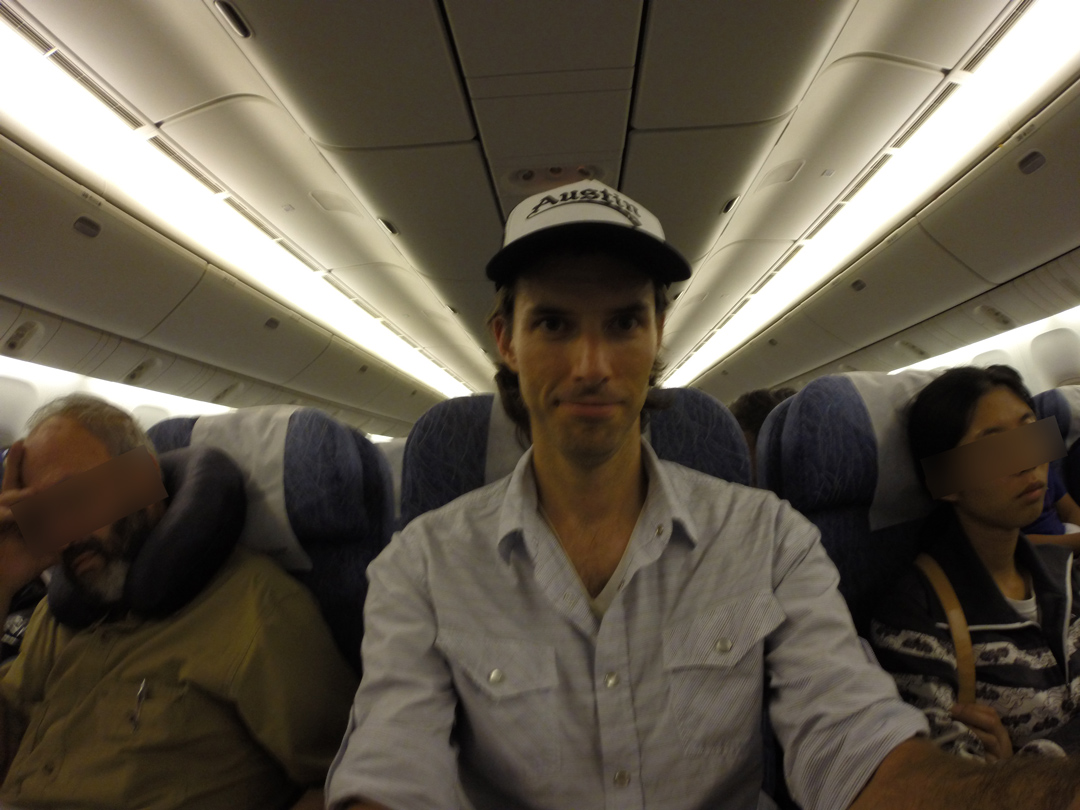
Per protocol, a selfie of me on the plane about to arrive in Beijing:
My excitement is palpable, compared to my seat neighbors. My longest flight to date!
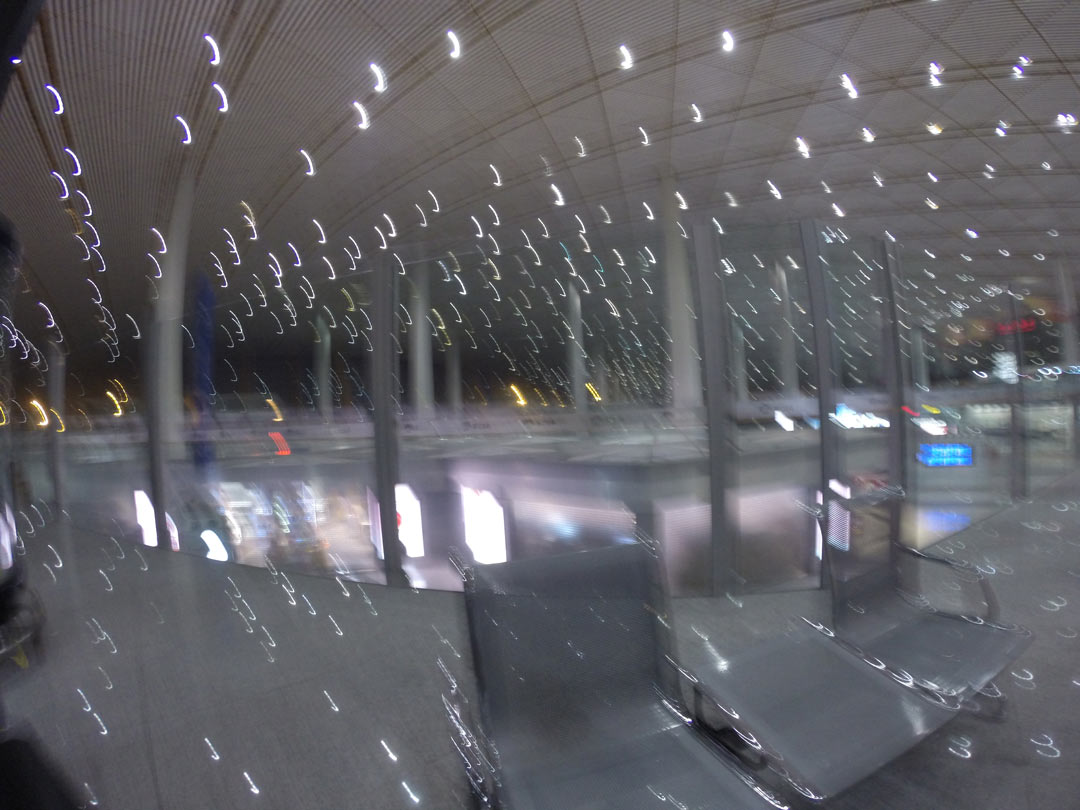
We arrived in the wee morning hours, Beijing time. The airport was eerily empty, and I took some snaps with my new GoPro 3+ Black that I had ordered mere days prior.
Slow shutter speed proves to be a consistent challenge in taking good indoor photos with the GoPro. In this case it added to the surreal atmosphere of the empty airport and its lighting design that bounces off the polished floors.
I went through two levels of security before gaining entry; the massive beard in my passport photo was no longer present, raising an eyebrow of the first officer. I presented my TX driver’s license to her supervisor to prove my non-bearded identity, eliciting a chuckle and nonchalant approval to enter the country.
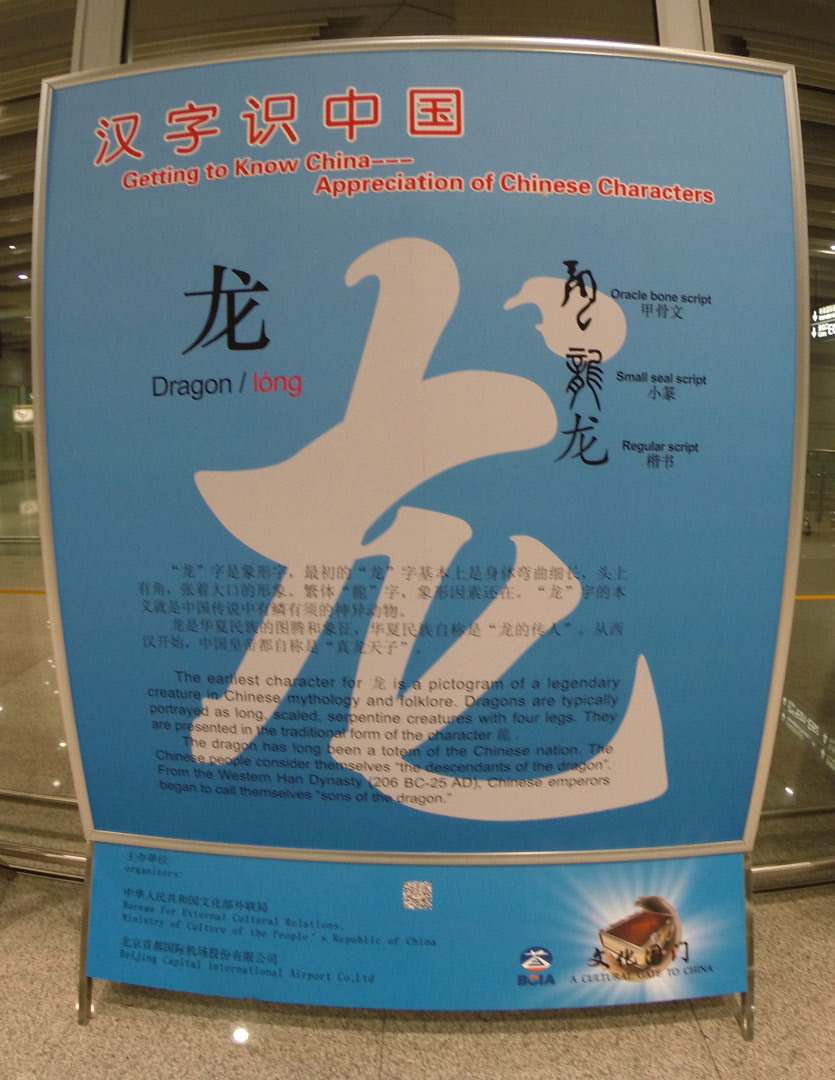
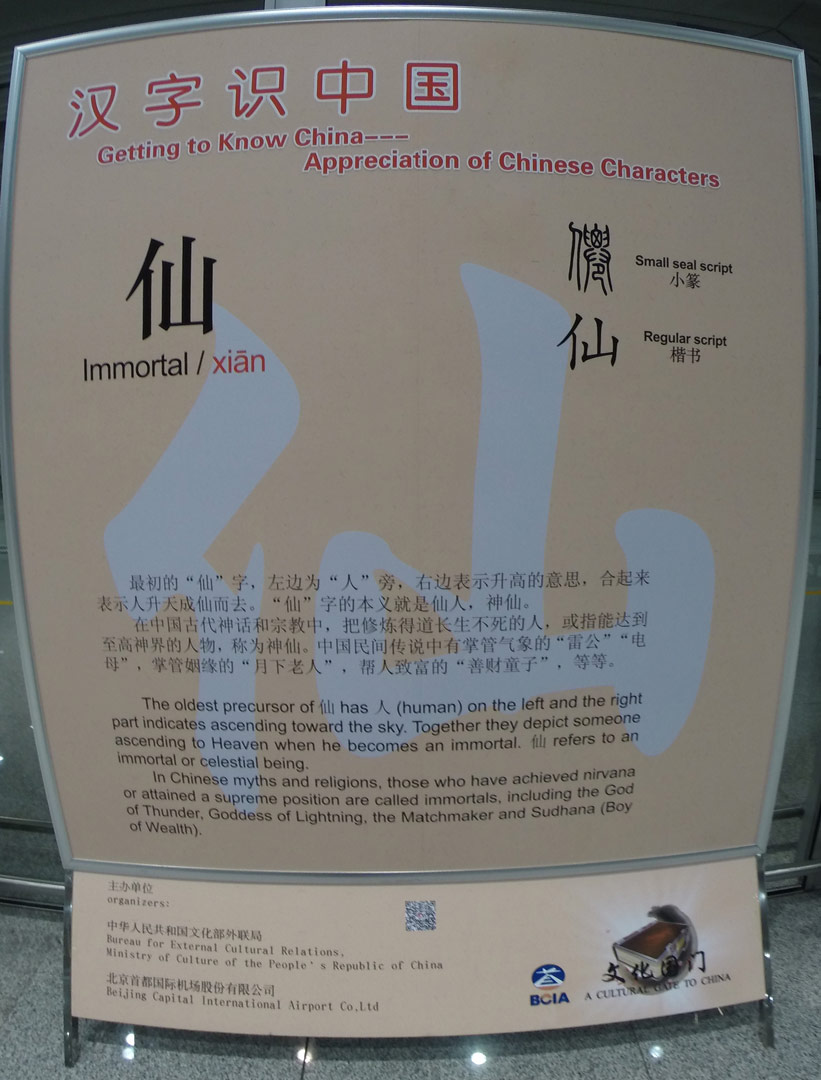
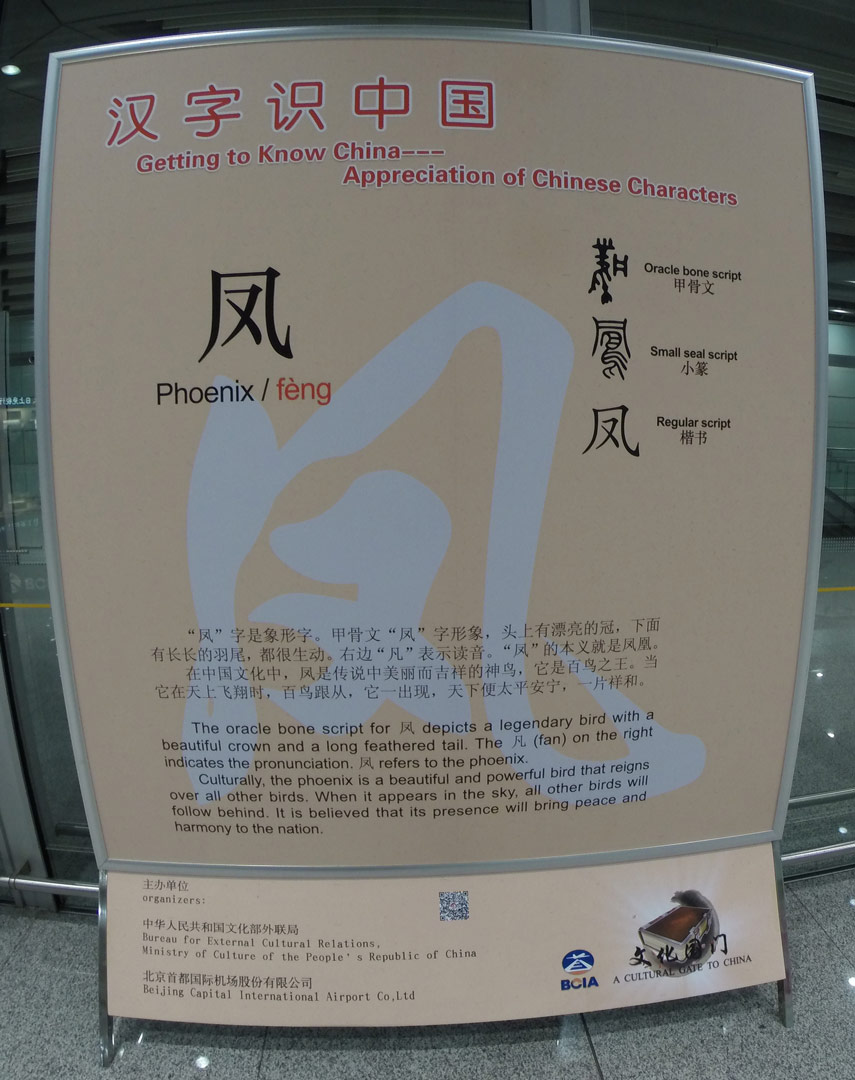
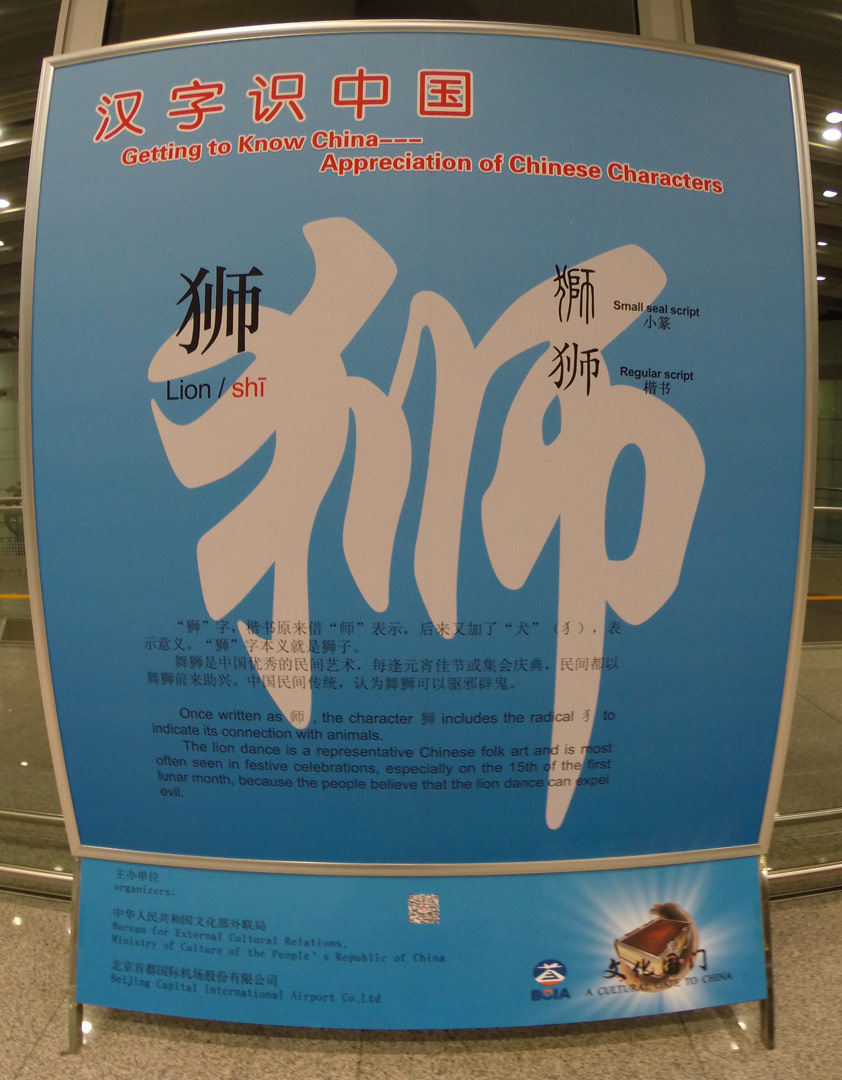
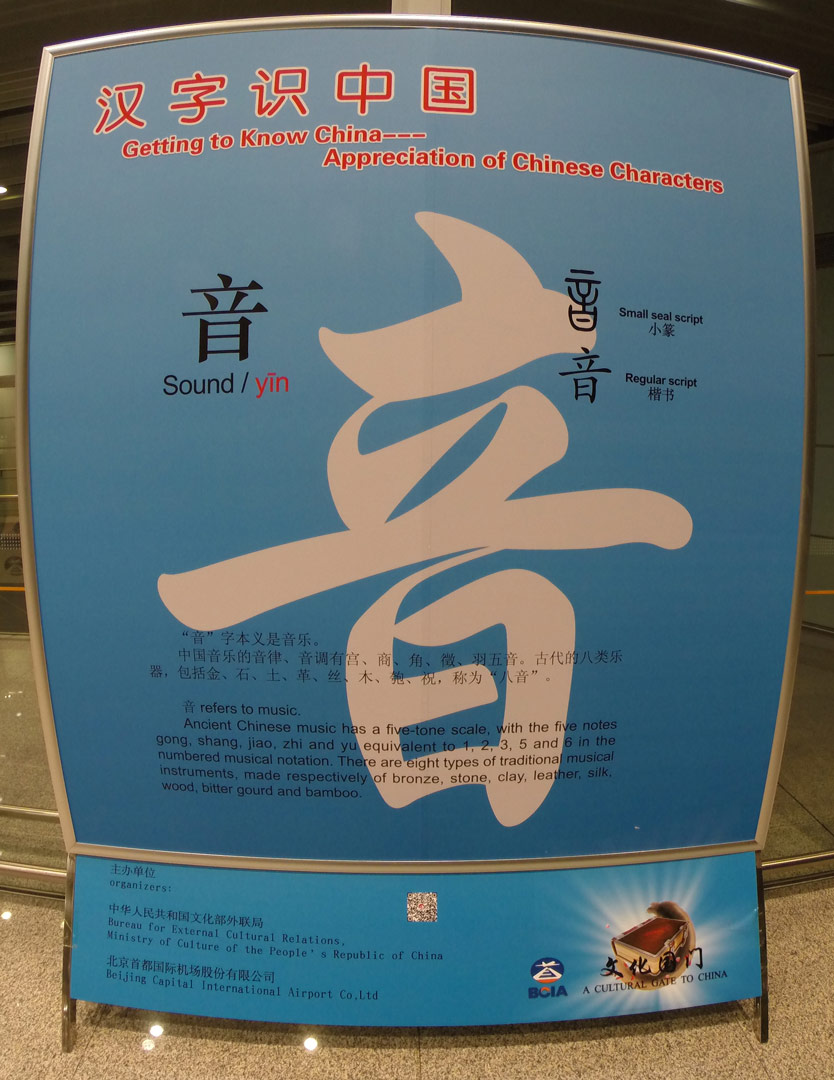
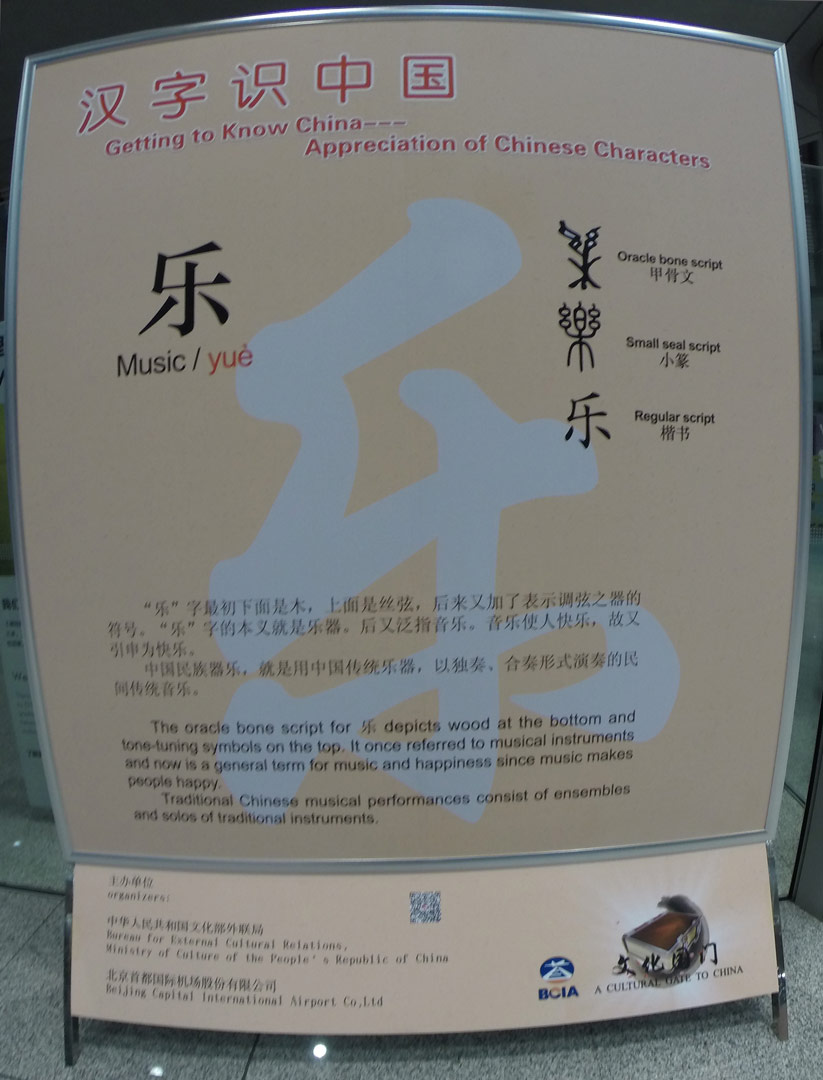
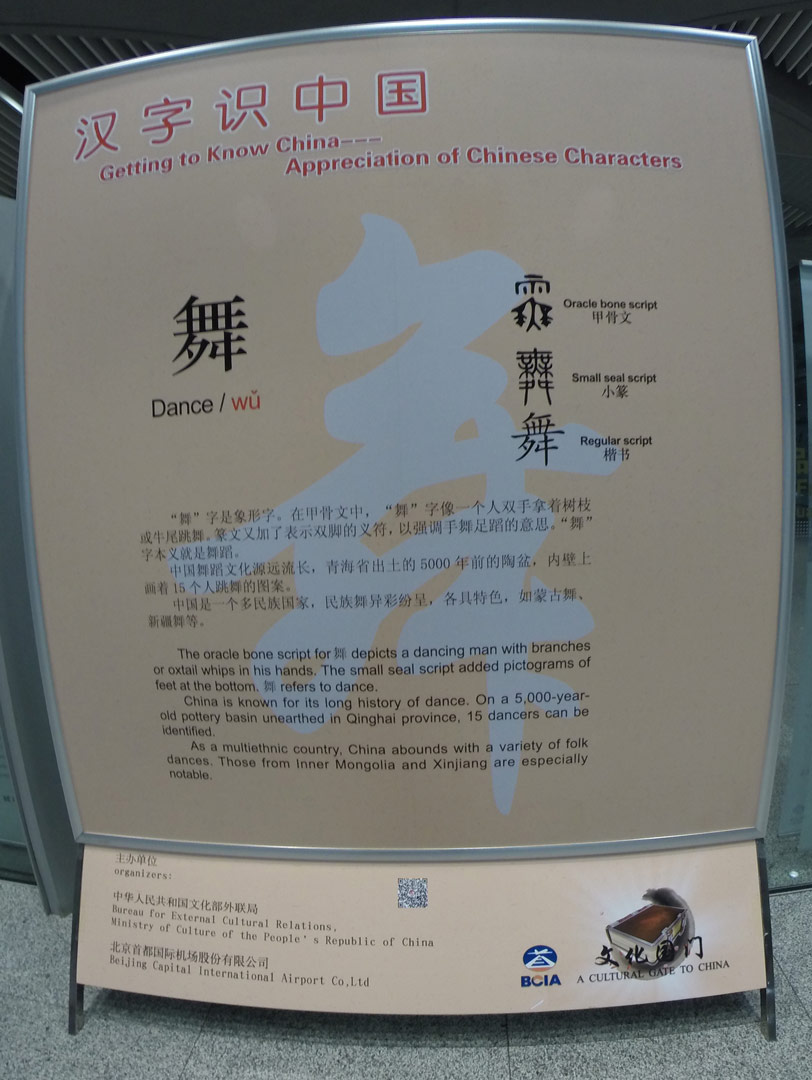
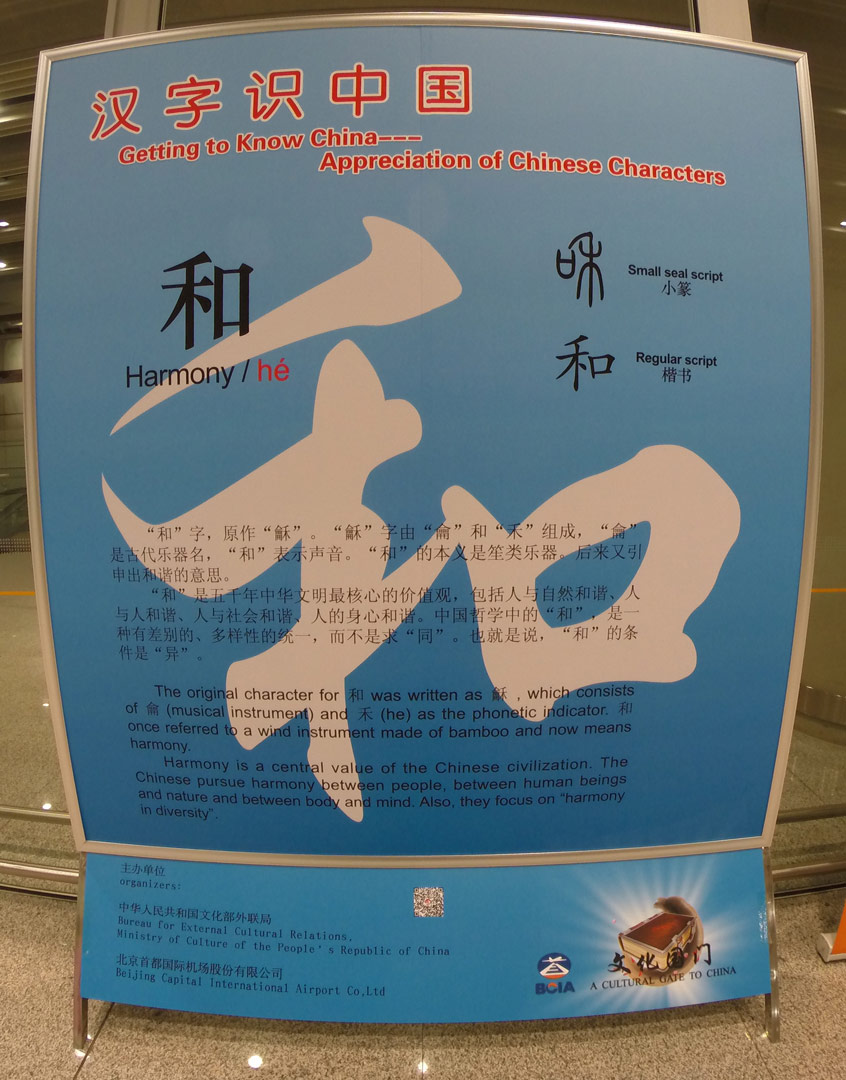
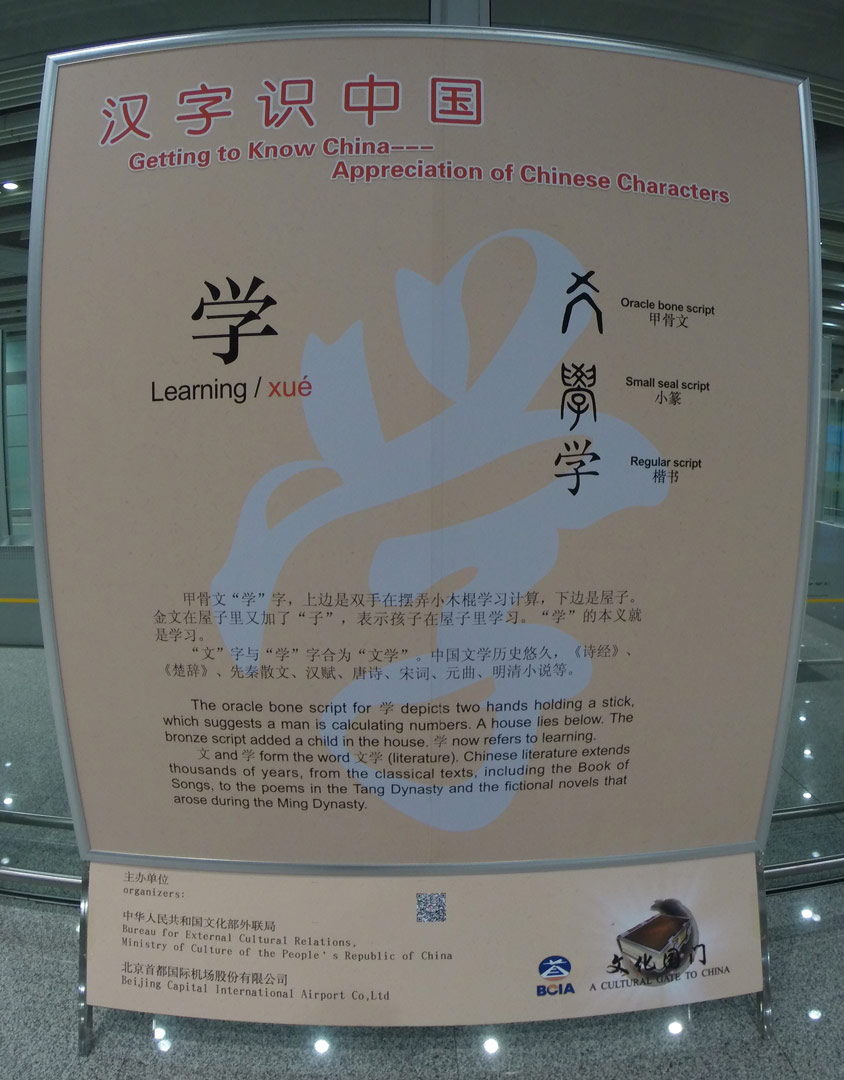
As we walked through the Beijing Airport, I noticed several large signs detailing the written language of China; a series called “Getting to Know China — Appreciation of Chinese Characters”. I snapped as many as I could while keeping an eye ahead, trying not to lose my group. I present them here as the focus of this first blog post on my China trip, with the English content transcribed in captions.
Immortal. The oldest precursor of [immortal] has (human) on the left and the right part indicates ascending toward the sky. Together they depict someone ascending to Heaven when he becomes an immortal. [Immortal] refers to an immortal or celestial being. In Chinese myths and religions, those who have achieved nirvana or attained a supreme position are called immortals, including the God of Thunder, Goddess of Lightning, the Matchmaker and Sudhana (Boy of Wealth).Dragon. The earliest character for [dragon] is a pictogram of a legendary creature in Chinese mythology and folklore. Dragons are typically portrayed as long, scaled, serpentine creatures with four legs. They are presented in the traditional form of the character […]. The dragon has long been a totem of the Chinese nation. The Chinese people consider themselves “the descendants of the dragon”. From the Western Han Dynasty (206 BC-25 AD), Chinese emperors began to call themselves “sons of the dragon”.Phoenix. The oracle bone script for [phoenix] depicts a legendary bird with a beautiful crown and a long feathered tail. The (fan) on the right indicates the pronunciation, […] refers to the phoenix. Culturally, the phoenix is a beautiful and powerful bird that reigns over all other birds. When it appears in the sky, all other birds will follow behind. It is believed that its presence will bring peace and harmony to the nation.Lion. Once written as […], the character includes the radical […] to indicate its connection with animals. The lion dance is a representative Chinese folk art and is most often seen in festive celebrations, especially on the 15th of the first lunar month, because people believe that the lion dance can expel evil.Forest. The oracle bone script for [forest] depicts three trees, suggesting many trees behind. […] refers to the deep woods. It is also used to describe gloomy and frightening feelings, just as we feel in the deep woods.Sound. [Sound] refers to music. Ancient Chinese music has a five-tone scale, with the five notes gong, shang, jiao, zhi, and yu equivalent to 1, 2, 3, 5, and 6 in the numbered musical notation. There are eight types of traditional musical instruments, made respectively of bronze, stone, clay, leather, silk, wood, bitter gourd, and bamboo.The oracle bone script for [music] depicts wood at the bottom and tone-tuning symbols on the top. It once referred to musical instruments and now is a general term for music and happiness since music makes people happy. Traditional Chinese musical performances consist of ensembles and solos of traditional instruments.Dance. The oracle bone script for [dance] depicts a dancing man with branches or oxtail whips in his hands. The small seal script added pictograms of feet at the bottom. […] refers to dance. China is known for its long history of dance. On a 5,000-year-old pottery basin unearthed in Qinghai province, 15 dancers can be identified. As a multiethnic country, China abounds with a variety of folk dances. Those from Inner Mongolia and Xinjiang are especially notable.Harmony. The original character for [harmony] was written as […], which consists of (musical instrument) and (he) as the phonetic indicator. [Harmony] once referred to a wind instrument made of bamboo and now means harmony. Harmony is a central value of the Chinese civilization. The Chinese pursue harmony between people, between human beings and nature and between body and mind. Also, they focus on “harmony in diversity”.Learning. The oracle bone script for [learning] depicts two hands holding a stick, which suggests a man is calculating numbers. A house lies below. The bronze script added a child in the house. [Learning] now refers to learning. […] and […] for the word (literature). Chinese literature extends thousands of years, from the classical texts, including the Book of Songs, to the poems in the Tang Dynasty and the fictional novels that arose during the Ming Dynasty.At the bottom of each sign was a QR code and credits to the organizers: Bureau for External Cultural Relations, Ministry of Culture of the People’s Republic of China, Beijing Capital International Airport Co,Ltd.
And thus began my experience in China!
I like to learn about Chinese culture and history, and enjoyed these signs. I only had time to read one or two while I was in the airport, so transcribing them for you has been a nice exercise for me too.
🙂


 Lusorium.Studio